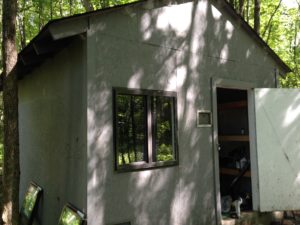
With all due respect to DuPont Tyvek I have gone with Prime Wrap for 1/3 the price.

Also got lots of insulating board from my Uncle Bob.

With all due respect to DuPont Tyvek I have gone with Prime Wrap for 1/3 the price.
Also got lots of insulating board from my Uncle Bob.
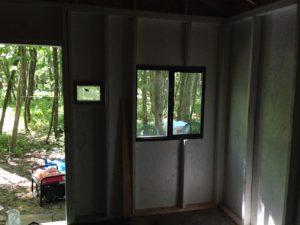
I used two cans of foam insulation and sealed any unwanted daylight leaking through. Bugs, mice, moths and spiders have tried to make this their home. Now that I’ve sealed it I also set off a bug bomb to get any stragglers. Of course I believe this will keep them out. There’s just no way they can find a way around it.


I finally removed the windows, caulked the seems and fastened them down permanently. I think I might have overdone the caulking.


Still some framing to do on the inside but I can do that with the windows in.
And finally. The last window (for now) is installed. I’m not yet sure which side I am putting the smallest one.
Several improvement. First off. The well is working. I tried it many times and it only would drag the generator down. Then my dad came out and I went to show him how it didn’t work. Sure enough. It worked.
Still runs a little red but I think that will clear up. It hasn’t run for almost five years.
I also got a compressor to run my brad gun.
Plus a propane lantern and camp shower
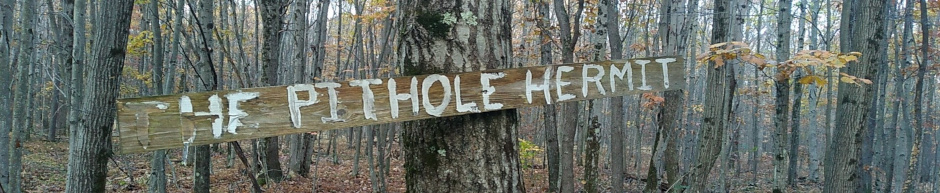
Okay. Time to cover what Pithole is.
Originally Pithole was just a creek near the Holmden farm in Venango County Pennsylvania.
The name supposedly came from some sulfur smelling holes along the creek. The holes or cracks probably also leaked natural gas into the air since some unconfirmed stories say people get sick or die near the holes. These holes do exist but it is not certain they are the source of the name. Another possibility is pits dug by native Indians, even predating the later Senecas, in order to obtain oil for medicine and rituals.
Things began to change with the drilling of Drake Well along nearby Oil Creek in 1859.
In January 1865 oil was struck in the Pithole area. A town soon sprung up on the location of the Holmden farm and by the end of the year Pithole City had nearly 20,000 people.
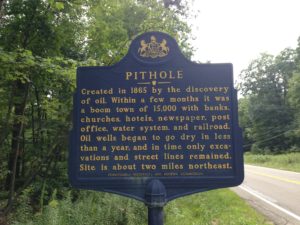
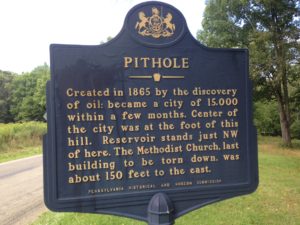
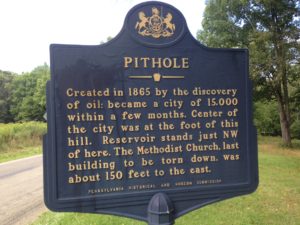
By 1868, after the oil flow slowed and many fires burned, Pithole City became a ghost town.
Today a museum is located on the site and signs mark the location of previous streets and buildings. The museum is run by the Pennsylvania Historical and Museum Commission and Drake Well Museum (Pithole.com and the Pithole Hermit are not affiliated with the commission or any state entity).
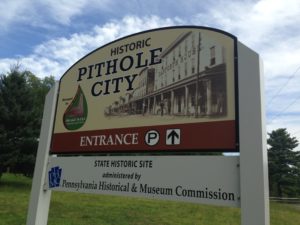
No buildings are left, but when I was a kid 3rd street hill was great for sled riding. Probably not allowed anymore. I don’t know.
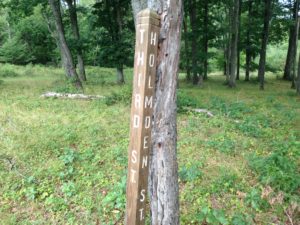
Anyway, site of old Pithole City is about 1.5 miles from my land. Pithole is the largest of many oil boom ghost towns dotting the hills of NW PA. The town of Redhot was less than a mile from my location.
Two good springs are nearby. Hengstler’s Spring on Pithole Rd and a unnamed spring on Pike Rd.
Pithole on wikipedia
Pithole Museum link
And yes, there’s still oil in them thar hills. Ancient remains of an old pumphouse is in the woods on the edge of my land. And a much newer producing gas well is just down the road.
I know. I’m slow. I can’t seem to handle the heat well so I have mainly been exploring and tenting. When the temperature drops soon I’ll do more cabin work.

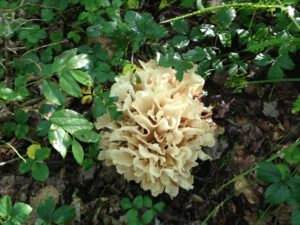
While wandering my land I discovered the combination of moist soil and shady trees is perfect for mushrooms. I am not very good at identifying mushrooms but there are some I know well. Here is a Cauliflower Mushroom I found this morning. It is edible, and some say very good, but it is just too ugly for me to try eating it.
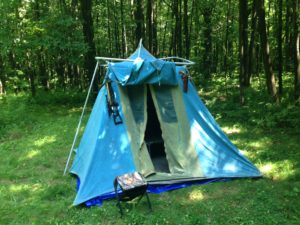
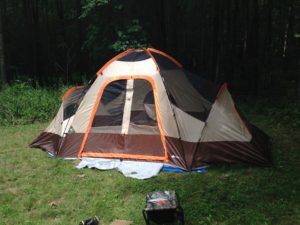
After nearly fifty years the old canvas tent finally ripped. A lot of memories camping with my dad. I got a new nylon tent. Bet it won’t last fifty years.